Virgin Mary
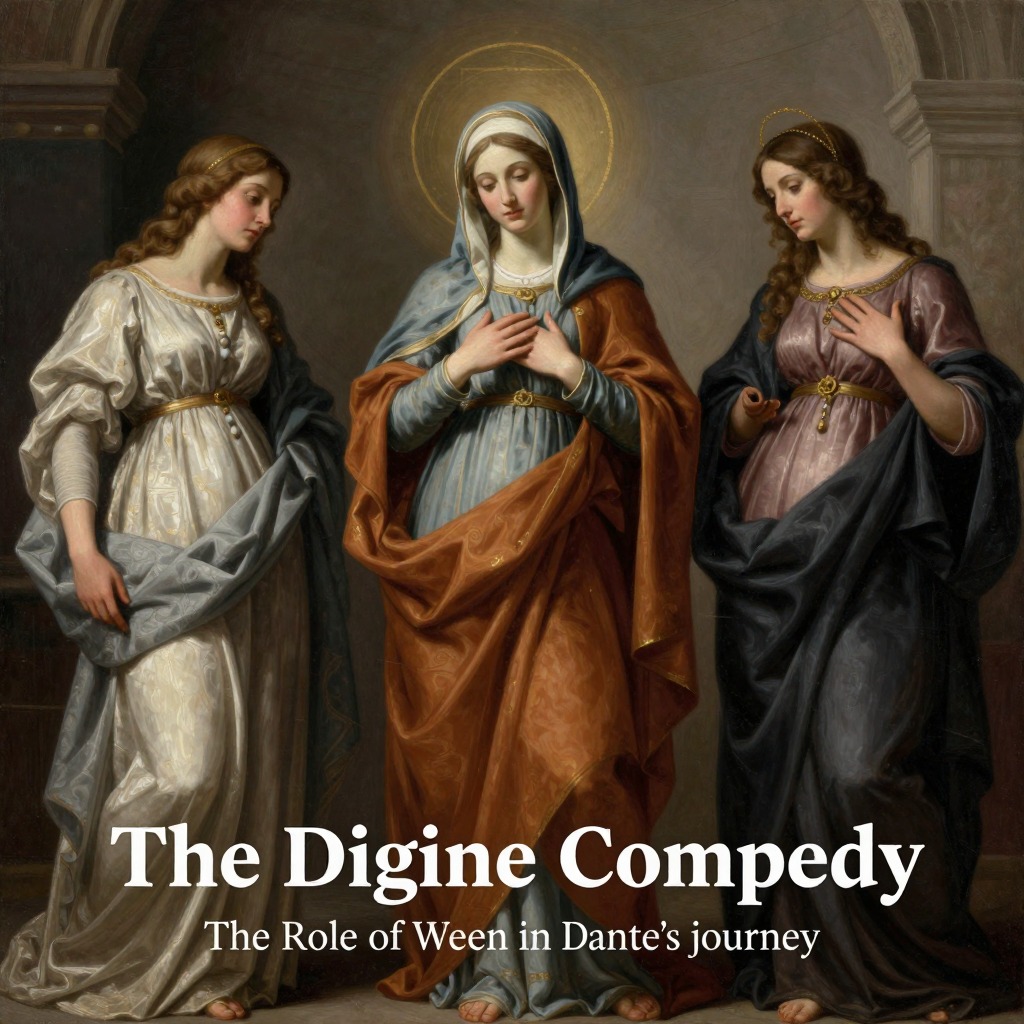
The Virgin Mary occupies the highest and most radiant place in Dante's vision of Paradise, serving as the Queen of Heaven and the ultimate intercessor for the souls of the blessed. Her presence is the culmination of the pilgrim's journey, the point toward which all grace and prayer are directed, and the figure through whom the divine plan is most perfectly revealed. In the Empyrean, she is the center of the Celestial Rose, the great white flower of the blessed, and her beauty and joy surpass all other sights, drawing the gaze of every saint and angel.
Identity and Role in the Celestial Hierarchy
Mary is introduced in the Paradiso as the "Virgin Mother, daughter of thy Son" , a paradox that encapsulates her unique position in Christian theology: she is both the mother of God and a creature of God, the highest of all created beings. She is the "limit fixed of the eternal counsel" , the point at which the divine plan for human salvation becomes incarnate. In the Empyrean, she is enthroned at the very center of the Rose, surrounded by more than a thousand jubilant angels , each differing in effulgence and kind. Her beauty is such that it is the gladness within the eyes of all the other saints (E14244–E14245), and her smile is the source of a joy that transcends all earthly experience. The angel Gabriel, who announced the Incarnation, hovers before her, singing "Ave Maria, gratia plena" , and the entire court of heaven responds with a canticle that makes every sight serener (E14351–E14352).
The Intercessor and the Fountain of Grace
Mary's role as intercessor is central to the final cantos of the Paradiso. St. Bernard of Clairvaux, who replaces Beatrice as Dante's guide for the final vision, addresses her in a prayer that is the climax of the poem. He calls her a "noonday torch of charity" and the "living fountain-head of hope" (E14415–E14417), declaring that she is so great and so prevailing that anyone who wishes grace but does not run to her "his aspirations without wings would fly" (E14419–E14420). Bernard emphasizes that her benignity not only gives succor to those who ask but often foreruns the asking of its own accord (E14422–E14423). He prays that she may scatter from Dante every cloud of mortality so that the Chief Pleasure may be displayed to him (E14436–E14438), and that she may preserve his affections sound after so great a vision (E14440–E14441). The eyes of Mary, "beloved and revered of God" , fasten upon Bernard and show how grateful to her are prayers devout, before turning to the Eternal Light (E14448–E14450).
The Queen of Heaven and the Celestial Rose
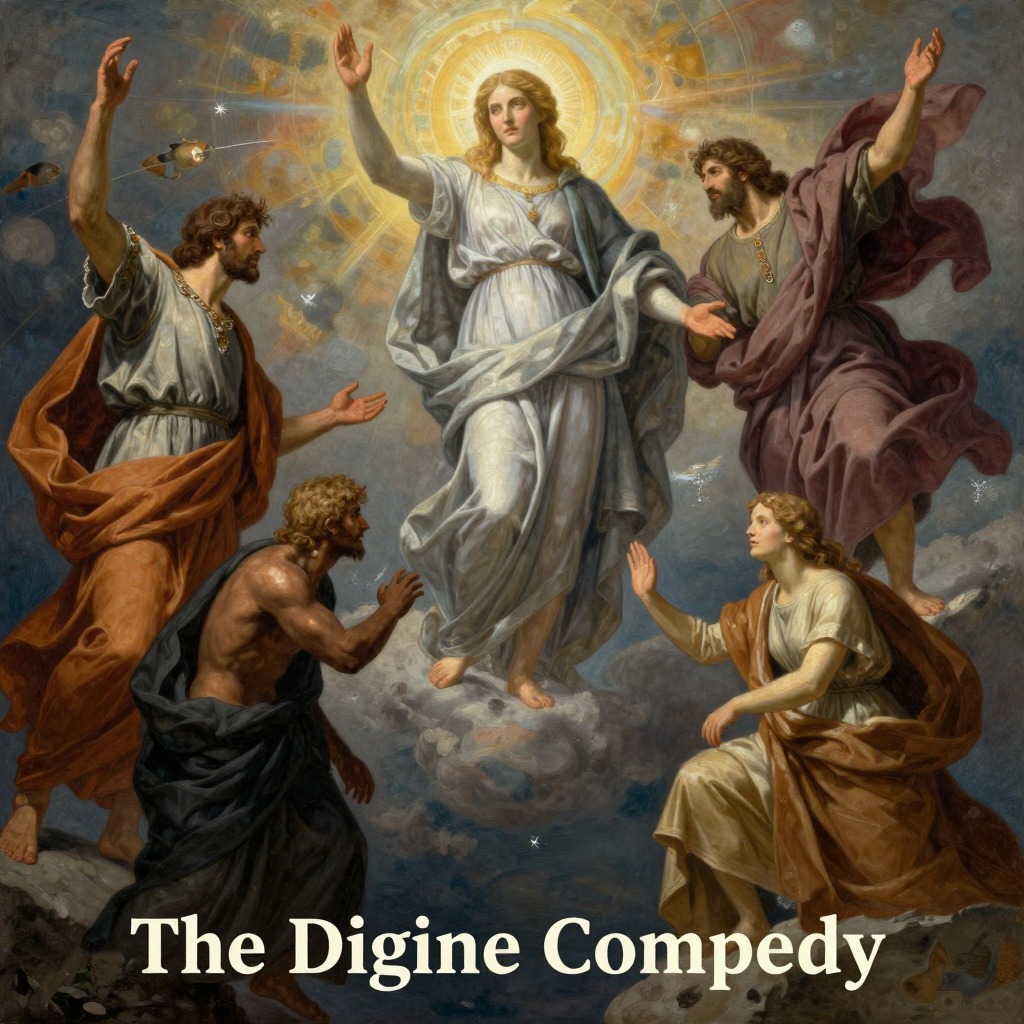
In the Empyrean, Mary is the Queen of Heaven, to whom the entire realm is subject and devoted (E14426–E14427). St. Bernard directs Dante to look at the most remote circles of the Rose until he beholds her enthroned (E14425–E14427). When Dante lifts his eyes, he sees a part of the Rose that surpasses all the rest in splendour, as the oriental part of the horizon surpasses that where the sun goes down (E14228–E14233). At the center of this pacific oriflamme, Mary gleams brightest, with the light abating in equal measure on each side (E14237–E14239). The angel Gabriel, who bore the palm down to Mary when the Son of God decreed to take on human burden (E14365–E14367), looks into her eyes with so much joy that he seems made of fire (E14356–E14358). St. Bernard explains that Mary is the one who closed up and anointed the wound that Eve, who sits at her feet, opened and pierced (E14257–E14259). The great patricians of the empire of heaven sit near her: Adam, the father by whose audacious taste the human species suffers, on her left, and St. Peter, to whom Christ committed the keys, on her right (E14374–E14379).
The Final Vision and the Prayer to the Virgin
The prayer to the Virgin Mary is the last human speech in the Paradiso before Dante's final vision of God. St. Bernard, who never burned for his own seeing more than he does for Dante's (E14433–E14434), offers all his prayers to her, asking that she may look down upon the tempest of the mortal world . He describes her as the one who gave such nobility to human nature that its Creator did not disdain to make himself its creature (E14409–E14411). Within her womb rekindled the love by whose heat this flower of Paradise germinated (E14412–E14414). The prayer concludes with a plea that Mary's protection conquer human movements, and that Beatrice and all the blessed ones clasp their hands to second his prayers (E14442–E14444). After this, Mary turns to the Eternal Light, and Dante, approaching the end of all desires, feels the ardour of desire within him ended (E14451–E14453).
Thematic Significance
Mary is the embodiment of the poem's central themes of grace, intercession, and the union of human and divine. She is the perfect creature, the one who, by her humility and obedience, reversed the disobedience of Eve and made possible the Incarnation and human salvation. In the Paradiso, she is the point at which the entire celestial hierarchy converges, the Queen who is also the handmaid, the mother who is also the daughter of her Son. Her presence is the guarantee that the journey from the dark forest to the vision of God is not a solitary human effort but a response to a grace that flows through her, the living fountain-head of hope. The final prayer to Mary is the last act of petition in the poem, and it is through her intercession that Dante is prepared to receive the Beatific Vision, the love that moves the sun and the other stars.